- Mood tracking
- Colour tracking
- No bullet journal
- Simple ideas
Mood tracker ideas without a bullet journal
The best mood tracker ideas are the simple ones: a colour, a word, a bead in a jar. Bullet journal spreads are lovely to look at and a lot of work to keep up, and you can learn just as much from far less.
 By JPott Studios
About a 6 minute read
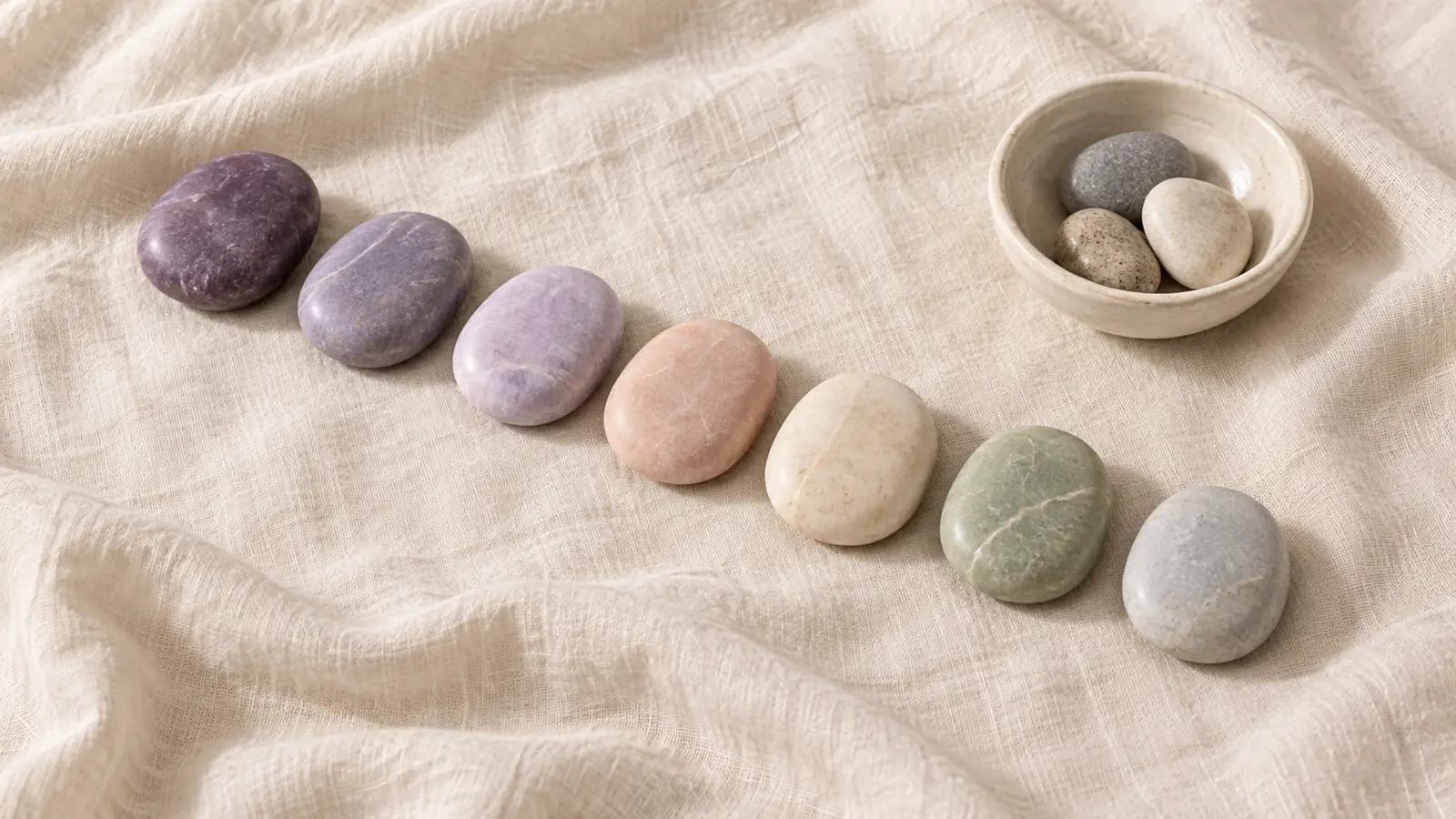
A mood tracker is just a small record of how each day felt, and these mood tracker ideas all take less than a minute. Kept for a few weeks, a record like that shows you things you'd never spot day to day: that Sundays dip, that one bad night's sleep follows you for two days, that a certain friend always leaves you lighter.
None of that needs washi tape. Below are easy ways to keep one, and how to read what you find.
Words or numbers: how should you rate your mood?
Before you pick a format, pick your scale. Lots of trackers use numbers from 1 to 10, but numbers are hard to answer honestly at the end of a day. Is today a 5 or a 6? Words are easier. You know whether you feel steady or unsettled.
Keep the list short to start. Five words is plenty. In Softly Noted, the five quick picks on the home screen are Overwhelmed, Unsettled, Steady, Good and Inspired, with ten more (like Tender, Curious, Lonely and Peaceful) for days that need a different word. Borrow those, or choose your own.
Five words to start with
The quick picks on the Softly Noted home screen.
 Overwhelmed
 Unsettled
 Steady
 Good
 Inspired
7 mood tracker ideas that need no bullet journal
1. A colour-in month
Give each mood a colour and fill in one circle a day on a plain monthly calendar. It takes ten seconds and a pencil. You can print our free printable mood tracker with a key already on it.
2. A year in pixels
A grid of 12 columns (months) by 31 rows (days), with one tiny square per day coloured by mood. By December you have a whole year on one page, and the seasons of your mood become visible. You can draw one in a spreadsheet by colouring cells, and our year in pixels guide shows how to set one up, even halfway through the year.
3. One line in your notes app
Keep a single running note. Each evening, add one line: the date, a mood word, and what shaped it. Something like "22 Sep, steady, good walk, slept badly." It's searchable, it's always with you, and there's nothing to set up.
4. Weather words
If naming feelings feels awkward, describe your inner weather instead: sunny, cloudy, foggy, stormy, clearing. People often find this easier to answer honestly, and it still shows patterns.
Your inner weather
- Sunny
- Cloudy
- Foggy
- Stormy
- Clearing
5. A jar on the shelf
Choose a few colours of beads, buttons or folded paper, and drop one in the jar each evening. It's lovely for children, for seeing a month at a glance, and for anyone who doesn't want to write a thing. If that's you, there are more ideas in journaling for people who hate journaling.
6. A mark on the wall calendar
If there's already a paper calendar in your kitchen, a small letter or dot in the corner of each day is enough. The best tracker is the one you walk past every day.
7. An app that does the colouring for you
A mood app keeps the record, draws the calendar and never runs out of pages. Look for one that's quick to use, lets you add context when you want to, and keeps your entries private.
Add the "why", lightly
The mood alone is useful. The mood plus one or two reasons is where you start to learn something. Keep a short list of things that often shape a day, and just note which ones showed up:
- Sleep
- Work or study
- Family, friends or a partner
- Health or your body
- Food, exercise and rest
- Money
- Weather
- Hobbies, or time just for you
Don't write paragraphs about them. A tick is enough.
How do you make a mood tracker stick?
- Tie it to something you already do. After brushing your teeth, or when you plug your phone in at night.
- Log the day as a whole, once. Evening works well for most people. If your mood swings a lot, a quick morning and evening entry is fine too.
- Leave missed days blank. Guessing a week later makes the record less true, and a blank is honest.
- Give it a month before you judge it. Patterns need a few weeks to show.
From JPott Studios
One calm email a month
One useful tip, one free printable or tool, and a short note from our apps. Join and get the free welcome pack: printable trackers, a packing list maker and more.
Reading it back, kindly
Once a month, sit down with it for a few minutes. Be curious, not critical. A few questions to ask:
- What tends to show up on my better days?
- What often comes before a harder one?
- Are there days of the week that always feel a certain way?
- Is there one small thing I could do more of next month?
A tracker shows patterns, not verdicts. It can't diagnose anything, and a run of hard days isn't a grade on how you're doing as a person. For more on turning what you notice into small changes, see how to track your mood, and what to do with what you find.
Where Softly Noted helps
Softly Noted, our mood diary app, is built around exactly this: pick one of 15 moods, tap what shaped the day from tags like Work, Family, Sleep, Money and Weather, and you're done. The Year in Pixels view colours in your year for you, so the patterns show without any drawing.
When things feel heavy. A journal is a kind place to put a day down, but it is not therapy and it is not a substitute for care. If low or anxious days keep stacking up, or something feels too big to hold alone, please talk to someone you trust, or to a doctor or counsellor. If you are in danger right now, call your local emergency number.
From JPott Studios
One calm email a month
One useful tip, one free printable or tool, and a short note from our apps. Join and get the free welcome pack: printable trackers, a packing list maker and more.